Don’t let your creative momentum stall while waiting days for a project to dry. Understanding quick set epoxy cure time is the ultimate secret to transforming liquid inspiration into a finished, unbreakable masterpiece in a fraction of the time. In this guide, you’ll learn how to master rapid-cure formulas for everything from intricate jewelry to structural wood repairs.
Understanding Fast Setting Epoxy Resin
When we talk about fast setting epoxy resin, we are dealing with a high-performance thermosetting polymer that undergoes a rapid chemical reaction. Unlike traditional glues that dry through evaporation, epoxy cures through a molecular cross-linking process called polymerization.
It is vital to distinguish between “set time” and “full cure.” For a typical 5-minute epoxy, the “set time” or “handling strength” is the point where the bond is firm enough to stay in place without support—usually achieved in about 30 to 60 minutes. However, the quick set epoxy cure time required to reach maximum chemical resistance and tensile strength is almost always 24 hours. These Epoxy Resin Tips are essential because disturbing a bond before it reaches handling strength can lead to weak joints and failed projects.
Optimizing Epoxy Cure Time at Room Temperature
Environment is everything in resin crafting. The standard epoxy cure time at room temperature is calculated based on an ideal range of 70°F to 80°F (21°C to 27°C). Because the curing process is an exothermic reaction—meaning it generates its own heat—ambient temperature acts as a powerful accelerator.
A professional rule of thumb is that for every 10°F increase above room temperature, the cure time typically cuts in half. Conversely, if your workspace drops 10°F below the ideal, your wait time may double. This is why many experts performing Diy Resin Art use heat lamps or warm water baths to ensure a predictable and rapid finish. Just be careful: if the room is above 90°F, the resin may react too aggressively, leading to a “flash cure” where the material smokes and cracks.
Using Rapid Set Epoxy for DIY and Home Decor
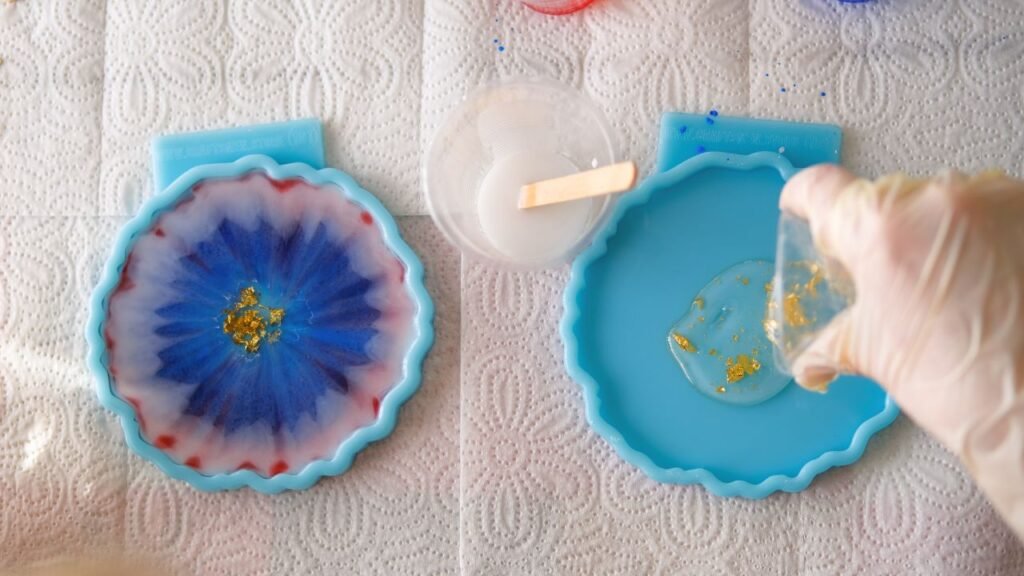
For those focused on Epoxy Resin Crafts, rapid set epoxy for DIY offers the convenience of finishing a project in a single afternoon. Products like Loctite Quick Set are specifically engineered for multi-piece projects that require high bonding strength without the wait. These formulas are excellent for gap filling and surface repairs because they do not shrink as they harden.
When following a Resin Crafts Tutorial, remember that even with rapid formulas, precision is mandatory. You must mix the resin and hardener in exact equal volumes, typically using a convenient double-syringe design to ensure the chemistry is perfect. If the ratio is off, the material will remain permanently tacky, a mistake that has ruined many promising craft projects.
Fast Setting Epoxy for Wood: Tips for Furniture and Repairs
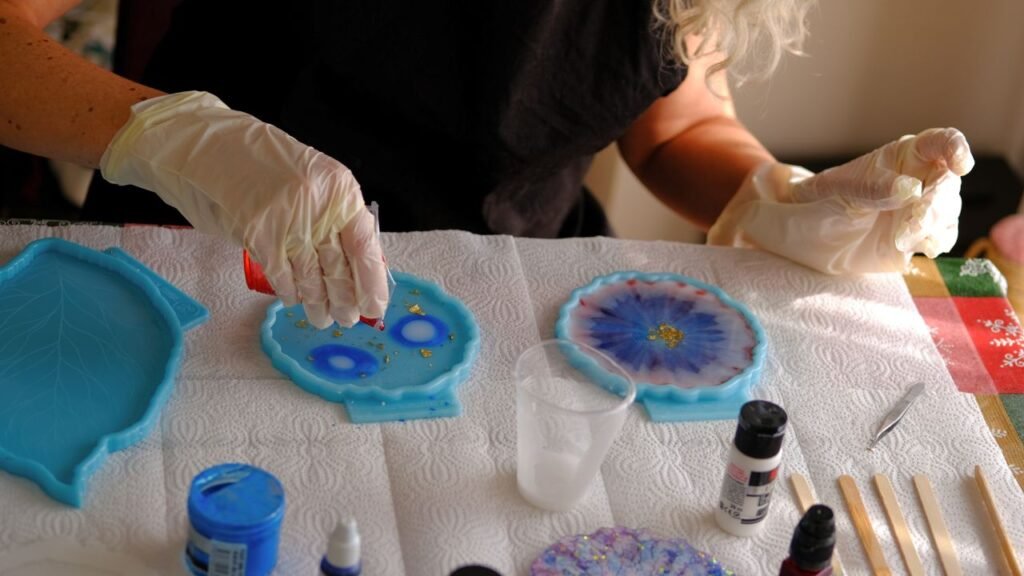
Woodworkers often reach for fast setting epoxy for wood when they need to anchor bolts, fill jagged burls, or repair structural cracks. Because wood is a porous material, it can sometimes “steal” heat from the epoxy, which slows down the cure time regardless of the air temperature.
If you are Starting A Resin Business selling custom furniture, clarity is your best selling point. To prevent wood from releasing air bubbles into your curing resin, professional fabricators often “seal” the wood with a thin coat of epoxy before the main pour. This ensures that your quick set epoxy cure time results in a glass-like finish that highlights the natural beauty of the grain rather than a cloudy, bubble-filled mess.

Quick Set Epoxy for Jewelry and Delicate Art
Small-scale projects require the most finesse. In a Resin Jewelry Tutorial, you’ll often see artists using quick set epoxy for jewelry to create domed decorations or to set stones in silver frames. Because these pours are thin, they lose heat to the environment faster than large batches, which can actually slow the cure.
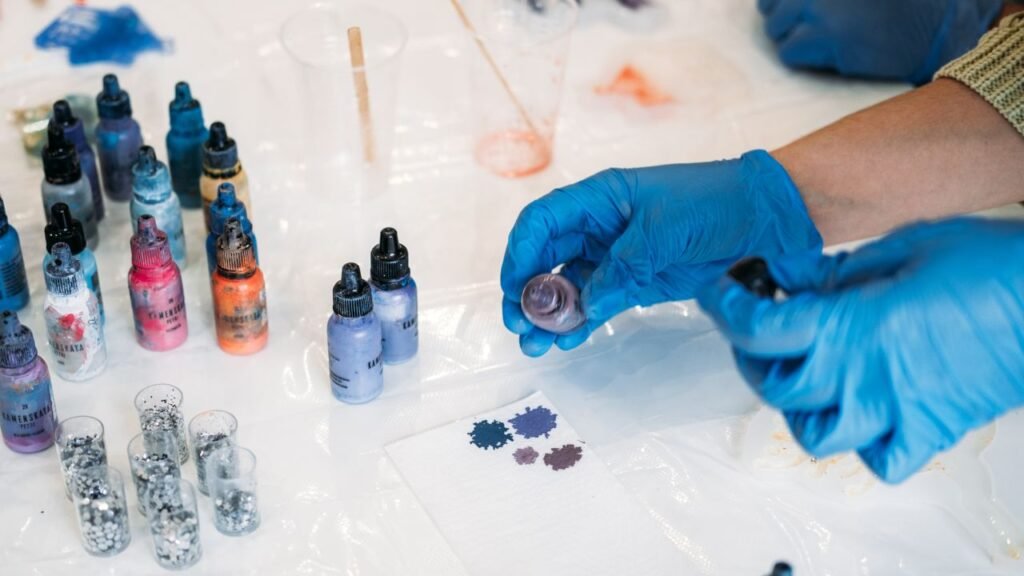
For a successful Resin Jewelry Diy, always pour with a slight “meniscus”—a small bulge over the top of the mold. Epoxy naturally shrinks slightly as it cures; this extra volume prevents the back of your pendant from becoming concave. If you are experimenting with Alcohol Ink Crafts, be mindful that adding too much ink can interfere with the chemical bond. Never exceed an 8% pigment-to-resin ratio, or your jewelry may never reach full hardness.
Factors Influencing Epoxy Cure Time on Metal
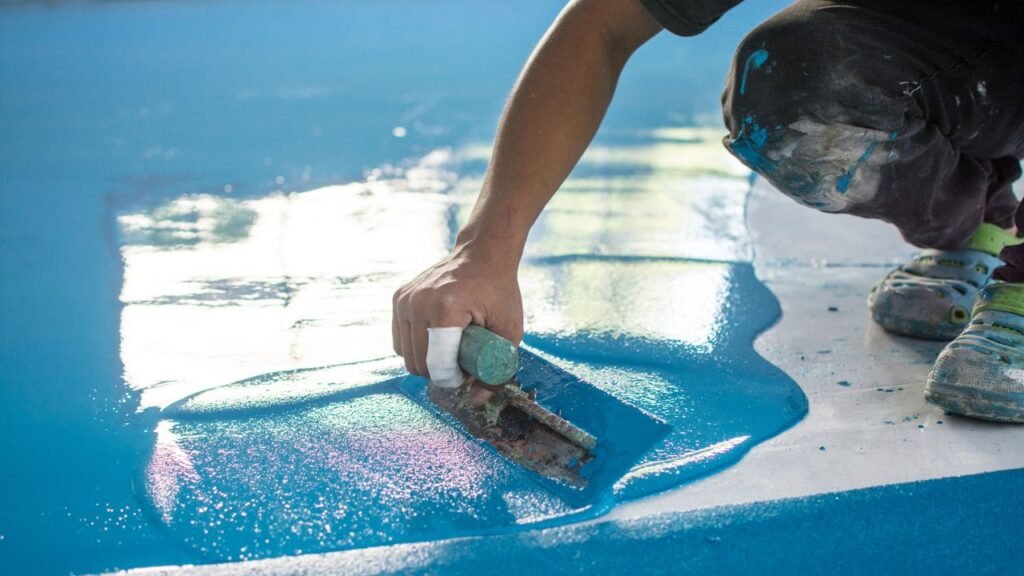
When measuring epoxy cure time on metal, the results are often more predictable than with wood because metal is dense and non-absorbent. To achieve maximum adhesion on surfaces like aluminum or cold-rolled steel, you must roughen the surface with sandpaper or an emery cloth first.
Data shows that for high-speed metal bonding, you can reach a tensile shear strength of over 1,300 psi in just one hour. However, if that metal component will be under heavy stress, you must wait the full 24-hour quick set epoxy cure time to allow the bond to reach its peak of over 3,400 psi.
Conclusion: Precision Leads to Speed
The secret to mastering quick set epoxy cure time isn’t just about choosing the fastest bottle on the shelf; it’s about respecting the science of the pour. By maintaining a consistent room temperature, measuring your ratios with absolute precision, and properly preparing your substrates, you can cut hours off your production time. Whether you are crafting delicate pendants or repairing a boat hull, these professional techniques will ensure your liquid imagination becomes an unbreakable reality every single time.

Frequently Asked Questions
How long is the quick set epoxy cure time for handling? Most fast-setting epoxies reach handling strength (where they are dry to the touch) in 30 to 60 minutes, though they require a full 24 hours to reach maximum strength.
Does temperature affect epoxy cure time at room temperature? Yes. For every 10°F increase in temperature, the cure time is roughly cut in half. Conversely, a 10°F drop can double the time you have to wait.

What is the best quick epoxy for crafts? 5-minute and 90-second epoxies are ideal for small crafts. They allow enough time for repositioning while ensuring your project is set and stable within an hour.
Can I use fast setting epoxy for wood repairs? Absolutely. It is excellent for filling cracks and anchoring hardware. Just ensure the wood is dry and clean to prevent bubbles from extending the cure time