–
The Introduction: What is Epoxy?
The Science of the Unbreakable Liquid
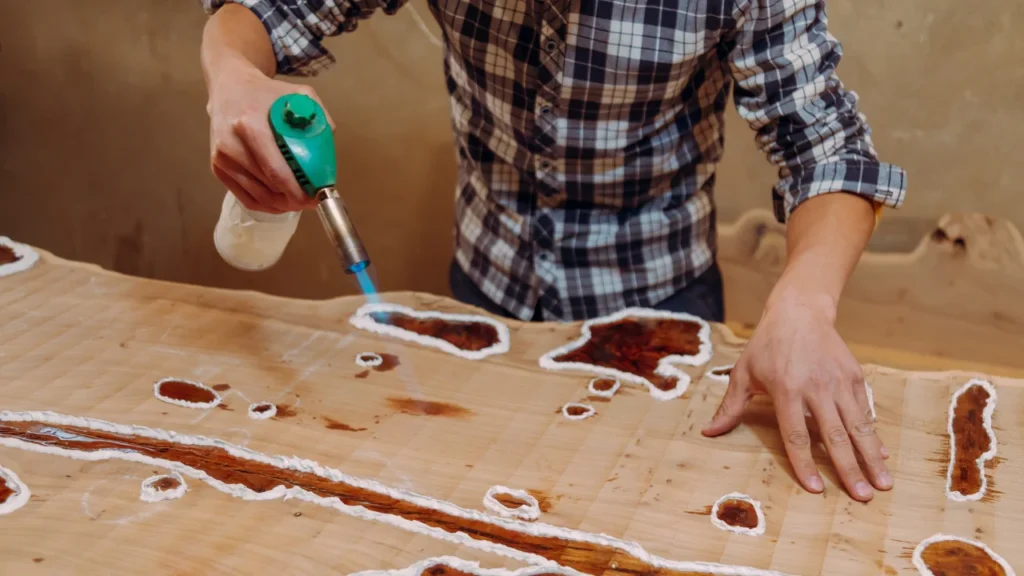
Epoxy is far more than just a standard glue or paint that dries through simple evaporation; it is an advanced thermosetting polymer.
When you mix the liquid resin with a hardener, you trigger a powerful chemical reaction. This process permanently cross-links their molecules together, forming an incredibly strong, rigid, three-dimensional network. Because this transformation relies on a permanent chemical bond rather than a physical drying process, the final material becomes virtually indestructible. Once it sets, it cannot be remelted, softened, or easily dissolved
Never Guess Your Measurements
Working with epoxy requires absolute scientific precision. Epoxy resins strictly require an exact mix ratio—most commonly 2:1 or 4:1 by volume or weight. If you add too much or too little hardener, the crucial molecular cross-linking process will fail. Your project will not cure properly and will remain a sticky, ruined mess forever. Always use a precise digital scale or highly accurate measuring cups to ensure perfection
Trapped Air Bubbles
The 40°C Water Bath Secret. Nothing ruins a beautiful project faster than thousands of trapped micro-bubbles. Instead of battling them with a blowtorch, use the professional water bath method. Before mixing, place your tightly sealed resin bottles into a 40°C warm water bath for about 10 minutes. The heat significantly thins the thick liquid resin, allowing any trapped air to effortlessly rise to the surface and escape, guaranteeing a perfectly clear, glass-like pour.
Beware the Deep Pot
Because the curing process of epoxy is an exothermic chemical reaction, it naturally generates heat. If you mix a massive volume of resin in one single, deep container, the concentrated heat cannot escape. This triggers a dangerous “flash cure”—the resin will violently overheat, smoke, potentially melt the container, and instantly harden into a cracked, useless block. Always divide large batches into smaller, shallow jugs to safely dissipate the heat
Epoxy Resin in Marine and Boat Repairs
Because of its exceptional mechanical strength and superior water resistance, epoxy resin is heavily relied upon in the marine industry for building and repairing boats and ships.
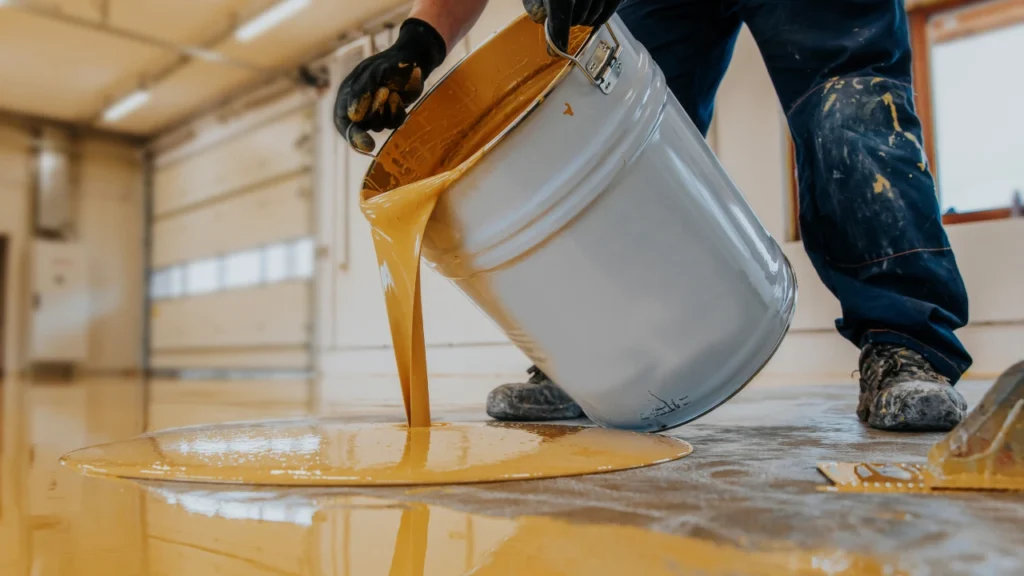
Here is exactly how and why epoxy is used for boat repairs:
- Unmatched Adhesion: Epoxy forms a strong, waterproof bond with a wide variety of materials, including wood, metal, and fiberglass. It bonds mechanically, by proximity, and even ionically at an atomic level, making it vastly superior to cheaper polyester resins for marine repair.
- Structural Reinforcements: It is commonly used to bond and seal joints, fill cracks, fix leaks, and laminate or reinforce damaged hulls.
- Fabric Compatibility: For high-strength, lightweight repairs, epoxy resin is ideal for wetting out and bonding with fiberglass cloth, carbon fiber, and Kevlar. Crucial Tip: Epoxy is not compatible with chopped strand mat (fiberglass mat), so always use woven cloth for your repairs.
- The UV Protection Rule: While epoxy is incredibly strong and waterproof, it tends to deteriorate and chalk out when exposed directly to UV light from the sun. Therefore, epoxy is typically not used as the final outer layer of a boat; after completing your structural repairs, you must over-coat the cured epoxy with a conventional two-part polyurethane paint or a marine varnish to provide UV protection
–
Avoid These Fatal Resin Mistakes

Whether you are repairing a boat hull, sealing a factory floor, or pouring a piece of custom art, working with epoxy requires absolute scientific precision. Avoid these three common failures:
1. Guessing the Mix Ratio Epoxy resins strictly require an exact mix ratio—most commonly 2:1 or 4:1 by volume or weight. If you add too much or too little hardener, the crucial molecular cross-linking process will fail, and your project will not cure properly, remaining a sticky, ruined mess forever. Always use a precise digital scale or highly accurate measuring cups to ensure perfection.
2. Trapped Air Bubbles Nothing ruins a project faster than thousands of trapped micro-bubbles. Before mixing, place your tightly sealed resin bottles into a 40°C warm water bath for about 10 minutes. The heat significantly thins the thick liquid resin, allowing any trapped air to effortlessly rise to the surface and escape without frothing, guaranteeing a perfectly clear pour.
3. The “Flash Cure” Because the curing process of epoxy is an exothermic chemical reaction, it naturally generates heat. If you mix a massive volume of resin in one single, deep container, the concentrated heat cannot escape. This triggers a dangerous “flash cure”—the resin will violently overheat, smoke, potentially melt the mixing container, and instantly harden into a cracked, useless block. Always divide large batches into smaller, shallow jugs to safely dissipate the heat
You can get epoxy resin here!
—
—
Privacy Policy
—