Picture an ambitious craftsman standing back to admire a newly finished, breathtaking river table. It took weeks of meticulous woodworking, strict temperature control, and a flawless, bubble-free liquid pour. As the glossy, glass-like surface beautifully catches the ambient light, a vital question naturally arises: how long will this masterpiece actually survive? Will the brilliant finish dull and degrade in a few short years, or is this creation built to outlive its creator?
This same anxiety plagues factory managers pouring vast industrial floors, boat builders repairing marine hulls, and jewelry makers crafting delicate pendants. The fear of degradation is common because most people mistakenly compare this advanced material to standard household paints or craft glues that inevitably dry out, crack, and peel.
However, epoxy is entirely different. It is an advanced, highly engineered thermosetting polymer. When the liquid epoxide resin (the “A side”) mixes with a polyamine hardener (the “B side”), it triggers a violent, exothermic chemical reaction known as polymerization. The molecules permanently cross-link, forming a rigid, three-dimensional network. Because this transformation relies on a permanent chemical bond rather than simple physical evaporation, the cured material becomes virtually indestructible. Once it sets, it cannot be remelted, softened, or easily dissolved.
So, how long epoxy resin lasts is not measured in months or years, but in decades and generations. Under the right conditions, a fully cured epoxy project is essentially permanent. Yet, even the most unbreakable liquid has specific scientific limits. Understanding these boundaries is the difference between a project that fails prematurely and one that lasts a lifetime.
Here are the five critical factors that determine exactly how long epoxy resin lasts.
1. The Threat of UV Light and “Chalking Out”
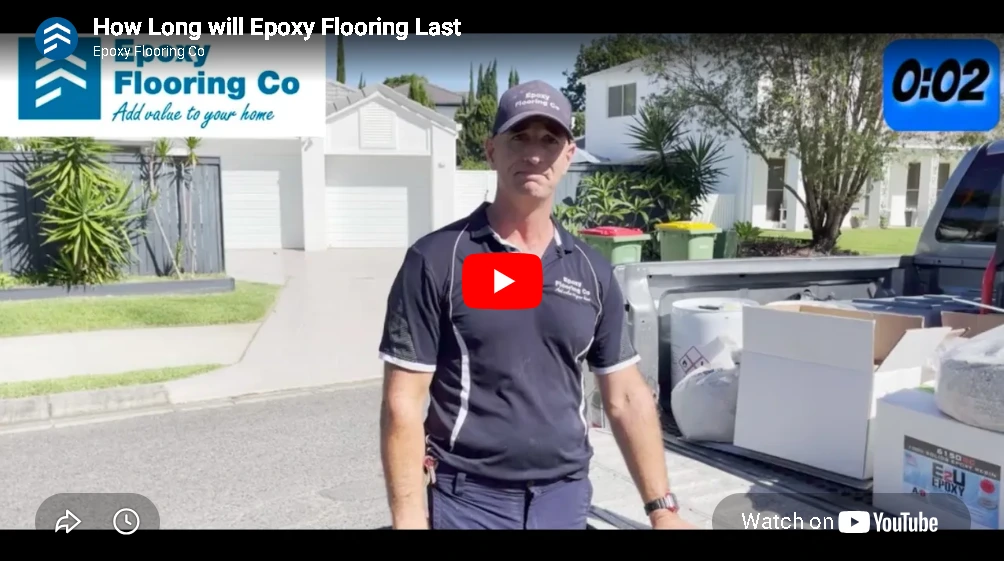
If this unbreakable thermosetting polymer has a single Achilles heel, it is the sun. While epoxy boasts unmatched mechanical strength and superior water resistance, continuous exposure to direct ultraviolet (UV) radiation will inevitably degrade its chemical structure.
When exposed to UV light over extended periods, a thermo-oxidative evolution of carbonyl groups occurs in the polymeric carbon-carbon backbone via a nucleophilic radical attack. In simpler terms, the clear resin will undergo an irreversible color change known as yellowing. If left exposed to harsh outdoor elements, the structural integrity of the surface will eventually begin to deteriorate and literally “chalk out”.
Does this mean outdoor projects are doomed to a short lifespan? Absolutely not. The marine industry relies heavily on epoxy for building and repairing boats, which spend their entire existence under the brutal sun. The professional secret to ensuring maximum lifespan in outdoor environments is a protective topcoat. By simply over-coating the fully cured epoxy surface with a conventional two-part polyurethane paint or a high-quality marine varnish, the material is completely shielded from UV radiation, preserving its extreme strength and clarity indefinitely.
2. Thermal Shock and Extreme Temperatures
Another crucial factor in determining how long epoxy resin lasts is the environmental temperature the finished piece will endure. Standard household and commercial epoxies are incredibly resilient, but their mechanical strength begins to heavily degrade when temperatures exceed 350 degrees Fahrenheit (177 degrees Celsius). Exposing a standard resin casting to extreme heat will cause it to soften and lose its structural integrity.
However, the industrial world demands materials that can survive the unimaginable. For extreme high-temperature environments, specialized industrial epoxy moulding resins are formulated to withstand severe thermal shock. Products like the Cotronics Durapot 860 series are engineered specifically for these brutal conditions. For example, Cotronics Durapot 861 and 865 can safely handle continuous temperatures up to 260 degrees Celsius. If even higher resistance is required, Cotronics Durapot 862 and 863 are designed to remain perfectly stable and structurally sound in environments reaching a blistering 315 degrees Celsius.
By selecting the correct thermal grade for the specific application, creators guarantee that heat will never compromise the lifespan of their work.
3. Unmatched Chemical and Moisture Resistance
Imagine a busy commercial warehouse or an automotive repair garage. The floors are constantly subjected to heavy machinery impact, dropped tools, and daily spills of harsh chemicals, motor oil, and gasoline. If a standard concrete floor is left unprotected, these aggressive fluids seep into the porous surface, causing deep stains, corrosion, and rapid structural degradation.
This is where the true longevity of epoxy resin shines. When applied as a seamless floor coating, the tightly cross-linked polymer matrix creates a completely impermeable, waterproof barrier. It physically blocks moisture, dirt, and highly corrosive acids from ever reaching the vulnerable substrate below. Even when exposed to aggressive cleaning solvents, the epoxy surface maintains its total integrity.
Furthermore, epoxy forms a spectacularly strong bond with the surface it protects. It adheres mechanically by seeping into microscopic pores, by physical proximity, and even ionically at an atomic level. This bond is so powerful that it often outperforms mechanical fasteners like heavy metal bolts. Because water and chemicals simply cannot penetrate or break this atomic bond, an epoxy-coated surface will last for decades without needing replacement, saving facilities massive amounts of repair time and money.
4. The Absolute Precision of the Mix Ratio
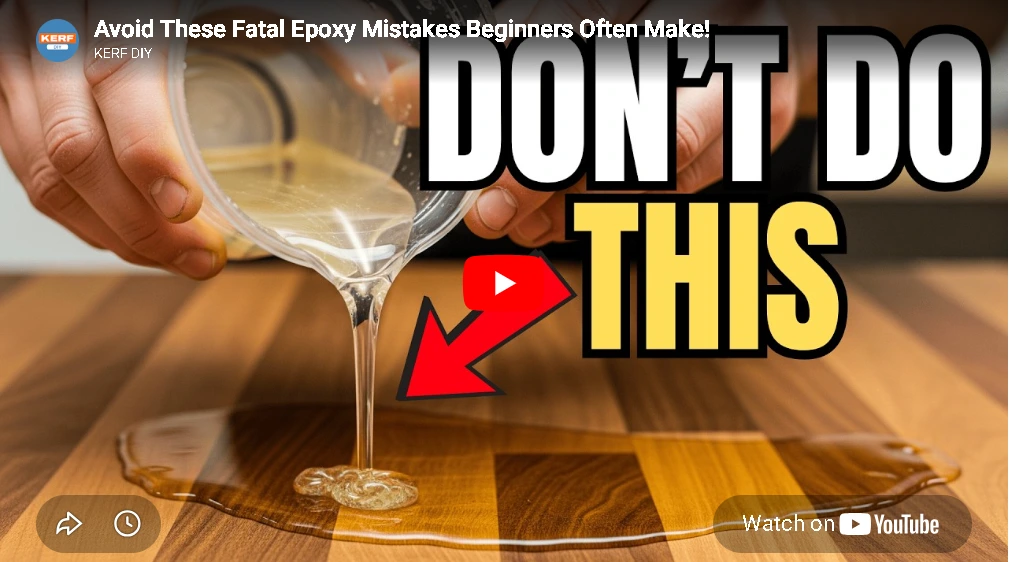
While environmental factors play a role in long-term survival, the most common reason an epoxy project suffers a drastically shortened lifespan happens before the liquid ever touches the mold. Because this material relies entirely on a delicate chemical reaction to cure, guessing the measurements guarantees an instant, heartbreaking failure.
A pervasive and highly destructive amateur myth suggests that adding extra hardener will force the piece to cure faster and stronger. Chemical science fundamentally disagrees. Epoxy resin systems strictly require an exact mathematical mix ratio—most commonly 2:1 or 4:1 by volume or weight. If the ratio of resin to hardener is even slightly unbalanced, the epoxide and polyamine molecules will physically fail to find each other to cross-link.
The tragic result is a project that remains a gooey, sticky mess forever. It will never harden, meaning its lifespan is effectively zero. To achieve a permanent, indestructible cure, absolute precision is mandatory. Creators must utilize a highly accurate digital scale, carefully measuring the exact gram weight of the resin and the exact corresponding weight of the hardener. Once mixed thoroughly for a full minute—ensuring the stirring stick firmly scrapes the sides and bottom of the container—the chemical reaction is perfectly locked in.
5. Managing Pigments and the Dangerous Flash Cure
Adding vivid color is what transforms a simple clear casting into a highly desired piece of decorative art. Creators use translucent dyes for a glass-like finish, pearlescent mica powders for a shimmering galaxy effect, and alcohol inks for stunning three-dimensional movements.
However, to ensure the resin lasts forever, the golden chemical rule of coloring must be respected: never add more than 8 percent pigment to the total volume of the mixture. Dumping too much heavy pigment powder or liquid dye into the mixing cup physically oversaturates the delicate chemical solution. The color particles actually block the molecules from bonding, entirely preventing the curing process and permanently ruining the piece.
Additionally, creators must be hyper-aware of the exothermic heat generated during the mixing stage. If a massive volume of resin is mixed in a single, deep plastic bucket, the concentrated heat generated in the center has absolutely nowhere to escape. The internal temperature skyrockets exponentially. Within minutes, the mixture will violently overheat, produce thick smoke, and instantly harden into a cracked, useless block of plastic—a catastrophic failure known in the industry as a flash cure. By dividing large batches into smaller, shallow jugs, the heat easily dissipates, ensuring a smooth pour and a flawless, permanent lifespan.
Elevate Your Craft: Invest in Permanent Quality
How long epoxy resin lasts is ultimately a testament to the marvel of modern material science. From holding aerospace composites together in the sky to protecting the delicate printed circuit boards in modern smartphones, its applications are incredibly vast and highly enduring. When a creator deeply understands how thermosetting polymers cross-link, how to protect the final surface from UV radiation, and how to strictly manage the precise chemistry of the mix, the fear of degraded, ruined projects completely vanishes.
The unbreakable liquid becomes a flawless, permanent blank canvas for limitless imagination.
However, knowledge alone cannot salvage cheap, low-grade materials. The brilliant clarity, the extreme mechanical strength, and the multi-decade lifespan of the final masterpiece depend entirely on the caliber of the raw supplies used. Do not gamble hours of meticulous woodworking, expensive botanical inclusions, or critical floor repairs on unverified, budget resins that yellow aggressively over time, bubble uncontrollably, or fail to cure into a rock-hard solid.
To guarantee that your next project achieves maximum durability and a flawless, crystal-clear triumph, professional-grade equipment is an absolute necessity. Equip your creative studio or industrial workspace with high-precision digital scales engineered for exact chemical ratios, brilliant pearlescent mica powders that blend seamlessly without clumping, and premium, low-odor epoxy kits formulated specifically for perfect self-leveling clarity.
Browse our complete collection of professional resin crafting supplies today. Give your art, your floors, and your repairs the premium, indestructible finish they demand. Stop guessing, start measuring exactly, and boldly transform your liquid imagination into permanent reality.
Get: molds ,tools, kits, mixer, pigments